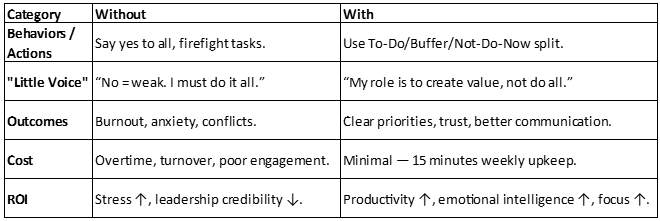
A junior analyst is asked to deliver an urgent report. Without a system, they say yes, miss deadlines, and feel overwhelmed. With the To-Do / Not-Do-Now List, They confidently show current capacity. Their VP backs them up. Stress ↓, trust ↑.
“This tool changed how I negotiate priorities with my VP. My team feels safer, and we deliver better.”
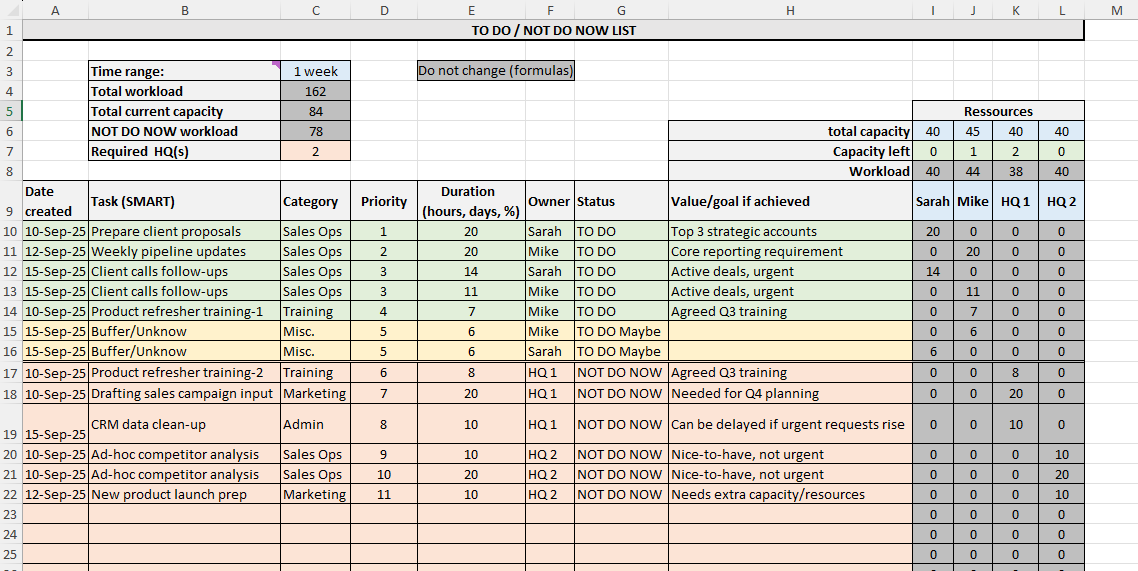
It’s a structured template that helps professionals and leaders visualize all their tasks, priorities, and capacity limits. By doing so, it becomes easier to manage time effectively, improve accountability, and say no when needed — all key skills in effective executive coaching and leadership development.
How does this tool help reduce stress and improve performance?
When your workload matches your capacity, you eliminate hidden overload. This creates psychological safety, improves communication with management, and allows you to focus on high-value work — leading to better results and less burnout.
Who should use this tool?
It’s ideal for busy professionals, emerging leaders, and project managers who handle competing priorities. It’s especially valuable for leaders managing cross-functional teams or navigating constant change.
How often should I update my workload and capacity plan?
We recommend a weekly review. It takes about 10–15 minutes to check your updated tasks, review progress, and adjust priorities — a small investment for lasting clarity and control.
How does this relate to executive coaching?
At Wiser Sooner Coaching, this tool is part of a broader coaching framework that builds safety, accountability, and influence. Our goal is to help leaders deliver more value with less stress — and that starts with aligning what you take on with what you can truly deliver.
Can this template help with delegation and team accountability?
Yes. When you visualize your workload clearly, you can identify which tasks to delegate, where to build team accountability, and how to set realistic expectations — all key components of leadership coaching and team performance.
Intéressant ? Des changements positifs potentiels pour vous ?
Quelles sont les prochaines étapes que vous êtes prêt à entreprendre ?







 FR
FR  EN
EN 